Țambalul: Romania's Hammered Dulcimer and Its Role in Folk Music
Discover the țambal, a stringed percussion instrument that has shaped the sound of Romanian lăutărească music for centuries, and learn about its construction, playing style, and cultural significance.
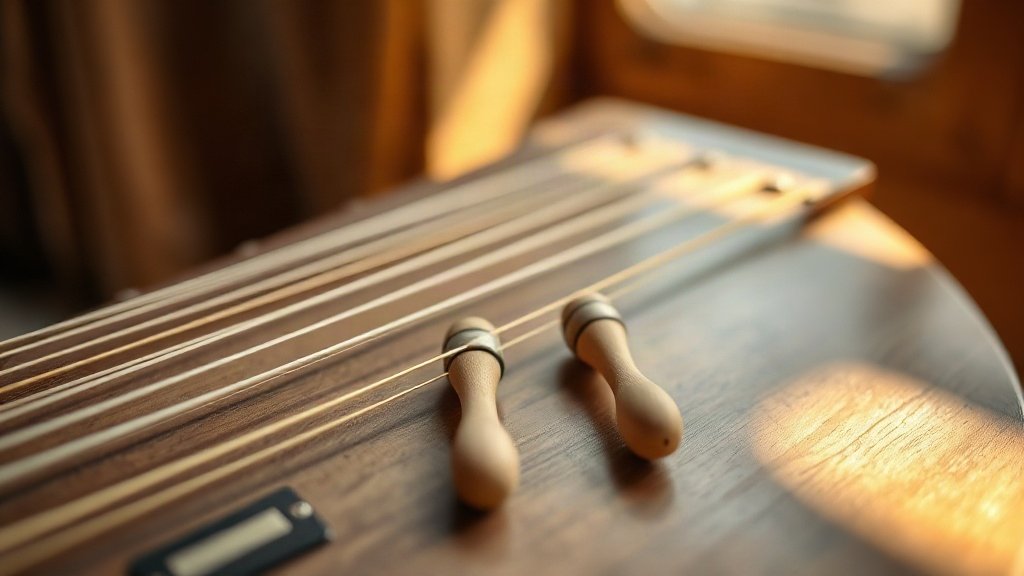
Illustration: AI-generated image
The țambal is a hammered dulcimer that holds a special place in Romanian folk music. With its shimmering, percussive sound, it adds both rhythm and melody to the lively tunes played at weddings, dances, and celebrations across the country.
History and Origins
Like many dulcimers found across Europe and Asia, the țambal likely evolved from the Persian santur, which spread along trade routes and through Ottoman influence. In Romania, it became closely associated with the lăutari, professional Romani musicians who performed at noble courts and village gatherings. By the 19th century, the țambal was a standard instrument in taraf ensembles, playing both folk and semi-classical pieces.
Construction and Playing Style
A țambal is a trapezoidal wooden box with numerous metal strings stretched across two bridges. The strings are arranged in courses and tuned chromatically, allowing the player to produce a wide range of notes. The instrument is played by striking the strings with two lightweight wooden hammers, often wrapped in cotton or leather to soften the sound. Skilled players can play rapid arpeggios, trills, and melodic runs, and they often use dampening techniques to control resonance.
Role in Romanian Music
In a traditional taraf, the țambal usually provides harmonic and rhythmic support, but it is also capable of carrying the melody. It shines in fast dance tunes like the hora, sârba, and brâul, where its crisp, bell-like tones cut through the ensemble. In the slower, more lyrical doina, the țambal can produce delicate, sustained notes that evoke a sense of longing. The instrument is also a favourite for solos, as virtuoso players demonstrate its expressive range.
Cultural Significance
Beyond its musical function, the țambal is a symbol of Romania's rich folk heritage. It is passed down through generations of lăutari families, and its presence is expected at important life events such as weddings and christenings. Today, the țambal continues to be heard in traditional music performances, folk festivals, and contemporary interpretations that keep the old sounds alive.
Where to Hear the Țambal Today
While the țambal is less common in everyday life than it once was, it remains a fixture at traditional music events and rural celebrations. Visitors to Romania can often hear it at folk festivals, open-air museums, and concerts featuring taraf bands. Many ensembles include a țambal player, and the instrument's bright, dancing tones are an invitation to join the circle.
For those interested in learning more, recordings of classic lăutărească music offer a window into the instrument's golden age, while contemporary folk groups continue to explore new possibilities.