Supă de Pui cu Tăieței: Romania's Comforting Chicken Noodle Soup
A steaming bowl of supă de pui cu tăieței is Romanian comfort food at its best – clear chicken broth with tender meat and delicate homemade noodles, served with parsley and love.
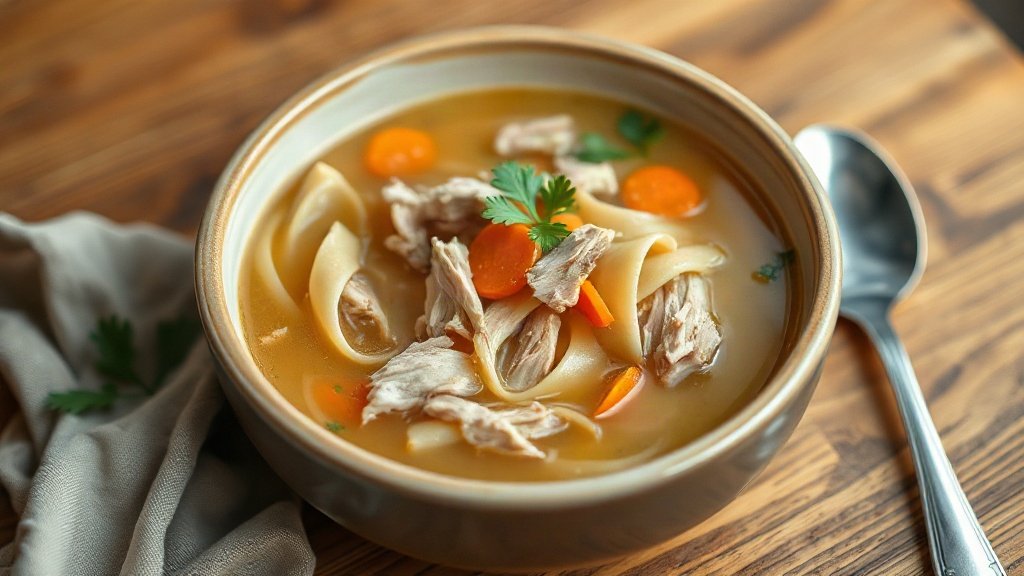
Illustration: AI-generated image
When Romanians need a bowl of warmth and reassurance, they often turn to supă de pui cu tăieței – a golden, clear chicken broth with silky homemade noodles. Unlike the sour ciorbă that dominates Romanian menus, this soup is mild, soothing and deeply homely. It is the kind of dish that appears on Sunday lunch tables, at family gatherings, and beside the bed of anyone feeling under the weather.
What Makes It Different from Ciorbă?
The key distinction lies in the broth. Ciorbă is intentionally soured with borș, lemon juice or vinegar, giving it a sharp, distinctive tang. Supă, on the other hand, is never soured. It is a clear, clean-tasting liquid made by simmering chicken and vegetables, then straining them out. The result is a delicate, comforting base that lets the flavour of the chicken and fresh herbs shine through. While ciorbă is often a hearty main course, supă is typically served as a starter or a light meal, sometimes accompanied by a spoonful of smântână (sour cream) and a slice of fresh bread.
The Classic Ingredients
A traditional supă de pui cu tăieței starts with a whole chicken or bone-in pieces, which give the broth body and richness. The vegetable medley usually includes carrots, onions, celery, parsley root and sometimes parsnip or leek. Seasonings are minimal – salt, whole black peppercorns and a bay leaf – allowing the natural flavours to develop. The star, however, is the tăieței: thin, flat noodles made from just flour, eggs and a pinch of salt. These are rolled out by hand and cut into ribbons, giving the soup its characteristic texture and home-made charm.
How It's Prepared
The method is simple but rewards patience. The chicken and vegetables go into a pot with cold water, which is brought slowly to a gentle simmer. Skimming away any foam that rises to the surface helps keep the broth clear and pure. After an hour or so, the chicken is removed, the meat shredded and set aside, while the vegetables are strained out. The broth is then seasoned to taste, and the fresh tăieței are cooked directly in the simmering liquid until just tender. Finally, the shredded chicken is returned to the pot, and the soup is ladled into bowls, finished with a generous handful of chopped fresh parsley.
When Romanians Eat It
Supă de pui cu tăieței is a fixture of the Romanian Sunday lunch, often served before the main course of sarmale or friptură. It is also the go-to remedy when someone catches a cold – many families believe its warmth and nourishment help speed recovery, though these are traditional beliefs rather than medical claims. At weddings and baptisms, a version of this soup may appear as the first course, signalling hospitality and care. Its mild flavour makes it suitable for children and the elderly, and it is often one of the first solid foods given to babies.
Making Homemade Tăieței
While shop-bought noodles are an acceptable shortcut, most Romanian cooks insist on making tăieței from scratch. The process is straightforward: combine flour with beaten eggs and a pinch of salt to form a stiff dough, then roll it out as thinly as possible on a floured surface. The dough is left to dry slightly, then rolled up and sliced into thin strips. The noodles are shaken loose and either cooked immediately or left to air-dry for later use. The result is a slightly chewy, egg-rich noodle that soaks up the broth beautifully.
In a country where soups are taken seriously, supă de pui cu tăieței holds a special place. It is not flashy or complex, but it is exactly what you want when you need something nourishing and familiar. Whether you try it in a Romanian home or make it yourself, this humble chicken noodle soup is a true taste of comfort.