Romania's Folk Costumes: A Guide to Regional Styles and Symbols
From the embroidered blouse to the woven belt, traditional Romanian dress tells stories of region, status and belief. Here's how to recognise the main styles.
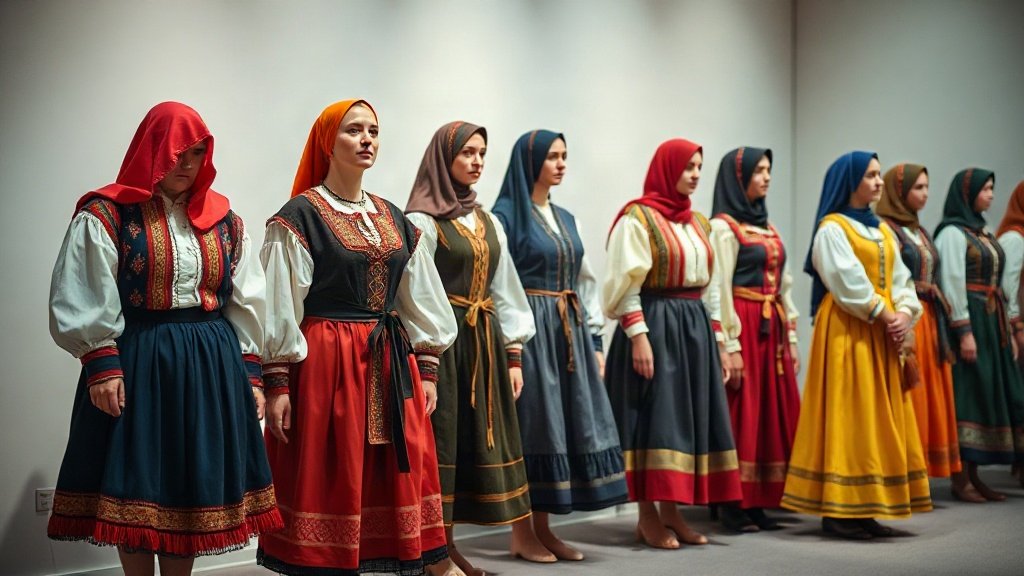
Illustration: AI-generated image
Traditional Romanian folk costume is far from uniform. Each historical region — and often each village — developed its own style, colours, and patterns. These garments were not just clothing; they were markers of age, marital status, wealth, and local identity. Today, they remain a vibrant part of festivals, weddings, and cultural pride.
The building blocks of a Romanian costume
Most women's outfits are built around the ie, a blouse richly embroidered on the sleeves, chest, and neckline. Over this, women wear a wrap-around skirt called a fotă or catrință, which is often woven with geometric patterns. A woven belt, brâu or bete, cinches the waist. Men typically wear a long white shirt, cămașă, with trousers, ițari (tight leggings) or cioareci (fuller trousers), plus a leather belt and sometimes a sheepskin vest, pieptar.
Regional variations
Moldavia and Bucovina: Costumes here are known for dense, black or dark red geometric embroidery, often covering the entire sleeve of the ie. Women wear a black or dark fotă with a separate front panel, catrință, in contrasting colours. Headscarves are often layered and heavily fringed.
Transylvania: Colours are brighter, with abundant red, blue, and white. The ie frequently features stripes of woven or sewn decoration on the sleeves, a style called ciupag. Women in some areas wear a pleated skirt, fustă, rather than a wrap-around. Men's cioareci are usually white and close-fitting.
Wallachia and Oltenia: Embroidery tends to use red, black, and gold threads with floral or vine motifs. Women often wear a single fotă that wraps around, and the ie may have wide, decorated cuffs and collar. The maramă, a long veil, is an important head covering in some parts.
Banat and Crișana: Influence from central Europe is visible in more tailored garments. Women sometimes wear a vest and a gathered skirt; men may wear a short jacket. Colours include deep greens, purples, and blacks, with silver or metallic thread.
Dobrogea: Due to the region's multi-ethnic history, costumes show Turkish, Bulgarian, and Tatar influences. Women might wear a long dress, rochie, with a sash, and men a wide cummerbund. Embroidery is often less dense but colourful.
Symbols and their meanings
Motifs are not random. The rombul (diamond) represents the eye, protection, or the cycle of life. The crucea (cross) is a protective symbol. The spirala (spiral) suggests continuity and time. The pomul vieții (tree of life) is common on wedding garments. Colours also matter: red wards off evil and symbolises life; black is associated with fertility of the soil in some regions; blue is for sky and water.
Wearing and preserving today
Authentic folk costumes are increasingly rare, but many families still keep heirloom pieces. Museums across Romania, such as those in Bucharest, Sibiu, and Cluj, display regional collections. At folk festivals, you will see both old pieces and newly made costumes following traditional patterns. Wearing one is a statement of belonging, not a costume in the theatrical sense — it is a living heritage.