Râpa Roșie: A Guide to Romania's Red Ravine
Discover one of Transylvania's most striking geological wonders, a landscape of towering red clay pinnacles and deep erosion gullies near Sebeș.
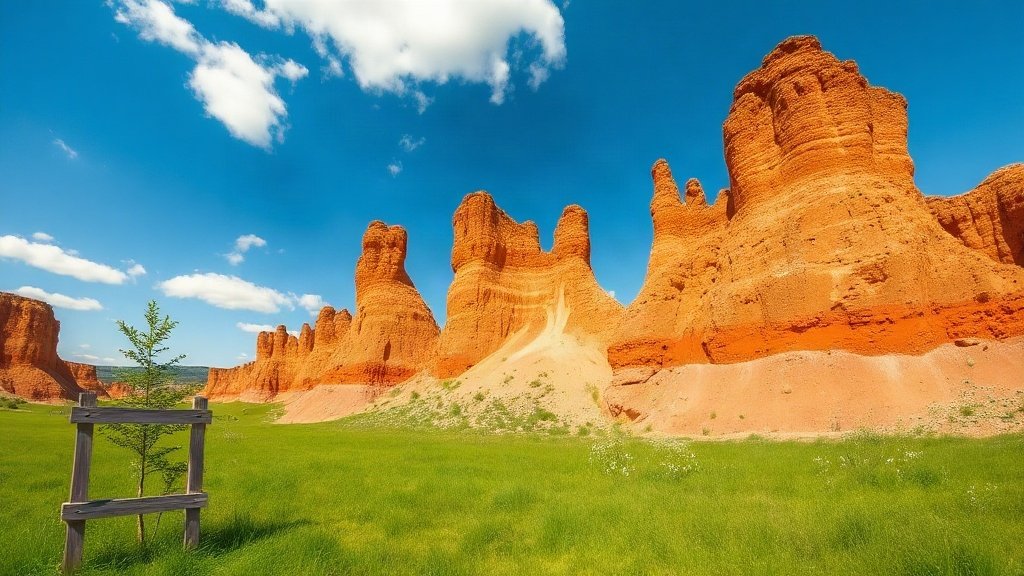
Illustration: AI-generated image
Few places in Romania feel as otherworldly as Râpa Roșie, a dramatic red clay formation near the town of Sebeș in Transylvania. Known locally as the 'Red Ravine', this natural wonder offers a short but rewarding excursion for travellers who enjoy hiking, photography and unusual landscapes.
What Makes Râpa Roșie Special
Râpa Roșie is a protected geological reserve covering about 25 hectares. The site is famous for its soaring columns, sharp ridges and deep gullies carved into red, pink and ochre clay. Over thousands of years, rainwater and wind have sculpted the soft sedimentary rock into a maze of spires and narrow canyons that glow warmly in the afternoon sun. The contrast with the surrounding green pastures and forest makes the scenery particularly striking.
Getting There
The ravine lies just 3 km south of Sebeș, a town well connected by road and rail. From Sebeș, follow the signs towards the village of Răchita and then continue on an unpaved road for the last kilometre. There is a small parking area at the entrance to the reserve. The site is easy to visit as a half-day trip from Sibiu (about 30 minutes by car) or from Alba Iulia (about 25 minutes).
What to See and Do
A marked trail of about 2 km loops through the reserve, leading visitors past the most impressive rock formations. The path is mostly flat and suitable for most fitness levels, though good walking shoes are recommended because the clay can be slippery after rain. Along the way, you will see deep corridors between the clay walls, natural arches and small caves. There are several viewpoints from which you can appreciate the scale of the ravine and its vibrant colours. Birdwatchers should keep an eye out for common buzzards and kestrels, which nest on the cliff ledges.
Best Time to Visit
Râpa Roșie can be visited year-round, but the colours are most vivid on sunny days, especially in the late afternoon. Spring and autumn offer pleasant temperatures for walking, while summer can be hot in the open areas—bring water and sun protection. Winter visits are possible if the path is not icy, and a light dusting of snow creates a beautiful contrast with the red clay.
Tips for Visitors
- Wear sturdy shoes with good grip; the clay can be muddy after rain.
- Stay on the marked trail to protect the fragile formations and avoid unstable edges.
- Allow about one to two hours for the loop, plus time for photos.
- Combine the visit with a stroll around Sebeș's historic centre, which has a charming Lutheran church and medieval walls.
- There are no facilities inside the reserve, so bring water and snacks if needed.
Râpa Roșie may be small, but it packs a big visual punch. It's an ideal stop for those exploring central Transylvania and looking for a natural wonder that is off the usual tourist trail.