Corvin Castle: A Guide to Romania's Gothic Masterpiece
Explore one of Eastern Europe's largest medieval castles, with its dramatic towers, drawbridge and tales of Vlad the Impaler.
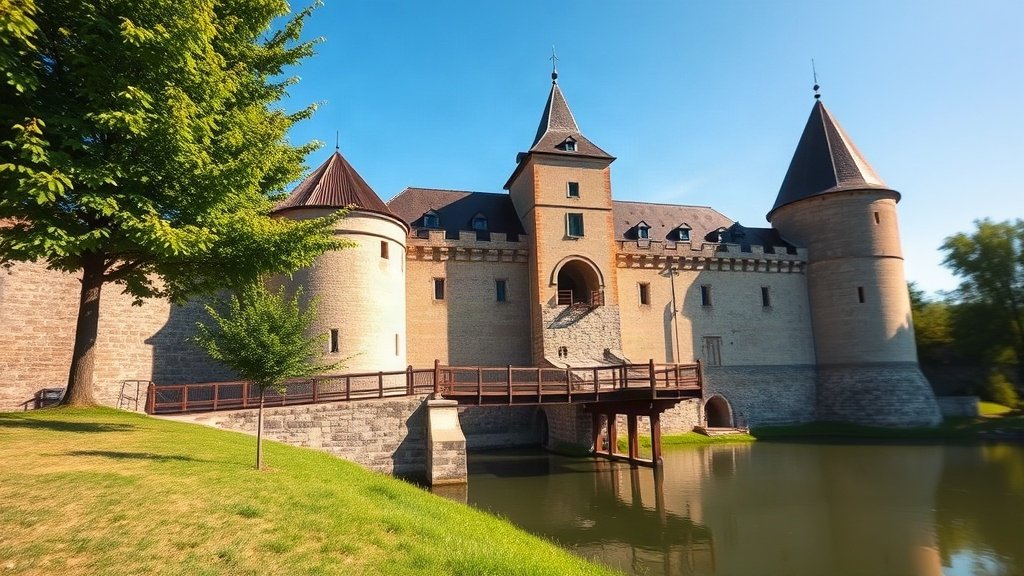
Illustration: AI-generated image
Rising above the small industrial city of Hunedoara in western Transylvania, Corvin Castle looks exactly as a medieval fortress should: stone walls, pointed turrets, a wooden drawbridge and a deep defensive moat. It is often cited as one of the largest and most impressive castles in Eastern Europe, and its Gothic architecture has made it a favourite backdrop for films and fairy tales.
The castle is also sometimes linked to Vlad the Impaler, the 15th-century Wallachian ruler who inspired Bram Stoker's Dracula. According to local tradition, Vlad was imprisoned here for several years, a story that adds a dark layer of intrigue to an already dramatic site.
A Castle with a Story
Corvin Castle was built in the 15th century by John Hunyadi, a powerful military leader and regent of Hungary. Over the following decades, the castle was expanded and embellished in Renaissance style, becoming a symbol of the Hunyadi family's wealth and influence. The castle's original name, Castelul Huniazilor, reflects this heritage.
Today, what remains is a sprawling complex of halls, towers, courtyards and chapels, linked by narrow spiral staircases and long galleries. Despite restorations, much of the original stonework survives, and walking through the castle feels like stepping back into the late Middle Ages.
Exploring the Castle
A visit usually begins at the main gate, reached across a wooden bridge that spans a dry moat. From there, visitors climb through a sequence of rooms, each with its own character. The Knight's Hall, the Diet Hall and the Council Hall are among the most impressive, with vaulted ceilings, carved stone details and traces of original frescoes.
The castle's towers offer sweeping views over the surrounding town and the Zlaști River valley. The most famous is the Capistrano Tower, named after the Franciscan monk John of Capistrano, who is said to have stayed here. Other highlights include the Bear Pit, where live bears were once kept, and the castle's own chapel, still used for occasional services.
Legends and Lore
Like any good castle, Corvin has its share of legends. The most persistent involves a deep well in the inner courtyard, sometimes called the Well of the Prisoners. One story claims that three Turkish prisoners dug the well over 15 years after being promised freedom, only to be executed when they finished. Another legend links the castle's raven emblem to the Hunyadi family, suggesting that John Hunyadi was the illegitimate son of King Sigismund and a woman named Erzsébet Morzsinai, and that a raven once brought a ring to the king as a token. These stories are fun to hear, but they are not documented historical facts.
Planning Your Visit
Corvin Castle is easy to reach by car or train from several major Transylvanian cities. Hunedoara lies about 20 kilometres south of Deva and roughly 120 kilometres west of Sibiu. The castle is signposted from the town centre, and there is a dedicated parking area nearby.
The site is partly open-air, so comfortable shoes and weather-appropriate clothing are recommended. Some staircases are steep and narrow, and the castle is not fully accessible for visitors with limited mobility. Photography is allowed inside, though tripods may require special permission. A visit typically takes between one and two hours, allowing time to explore the main rooms and enjoy the views from the towers.
Because Corvin Castle is a popular attraction, especially in summer and around Halloween, it is worth arriving early in the day to avoid the crowds. The castle is generally open to visitors throughout the year, but hours can change, so check ahead before making a special journey.