Claca: Romania's Time-Honoured Tradition of Communal Work and Celebration
Discover claca, the Romanian custom of neighbours coming together to help with a big task, followed by food, music and dance. It remains a living part of village life.
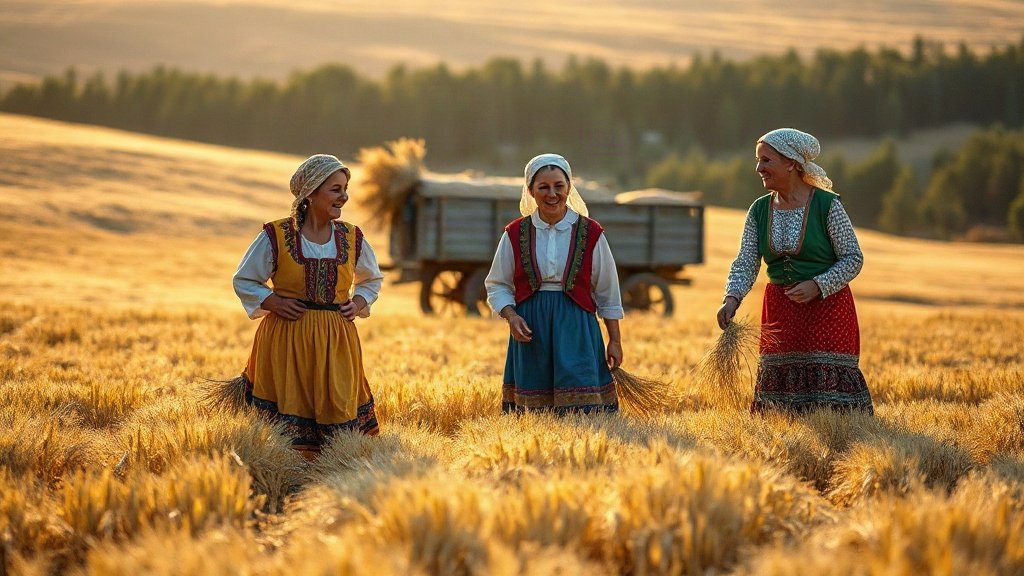
Illustration: AI-generated image
In many Romanian villages, when a family faces a large or urgent task — bringing in the harvest, building a barn, or spinning a winter's worth of wool — they don't face it alone. Neighbours and friends gather for a claca (plural clăci), a communal work party that turns labour into a social occasion. The host provides food, drink, music and sometimes an evening dance in return for the helping hands.
What Exactly Is a Claca?
Claca is one of the oldest forms of mutual aid in Romanian rural culture. The word itself comes from Slavic roots meaning "gathering" or "assembly." Traditionally, no money changed hands; participants contributed their time and strength, knowing that the favour would be returned when they needed help. It was a practical solution in a world without hired labour, but also a way to strengthen community bonds.
Common Types of Claca
Different tasks called for different kinds of claca, each with its own rhythms and songs. Some of the most widespread include:
- Claca de secerat – harvesting grain, often done in a race-like atmosphere with reaping songs.
- Claca de tors – spinning wool or hemp, a women's gathering where stories and gossip flowed as fast as the spindles.
- Claca de construit – building a house or barn, with men raising beams and thatching roofs to the sound of encouragement and jokes.
- Claca de desfăcat porumb – husking corn, often accompanied by singing and playful competitions.
Food, Music and Celebration
Work during a claca was never silent. Work songs, known as cântece de lucru, set a rhythm and lifted spirits. After the task was done, the host offered a generous meal — typically mămăligă with cheese and sour cream, stews, and homemade wine or țuică. The evening often ended with a horă, the circle dance that brings everyone together. Some clăci even included a small fair or game for the younger participants.
How Claca Survives Today
While modernisation has reduced the need for collective manual labour, claca has not disappeared. In many villages, especially in Maramureș, Bucovina and rural Transylvania, neighbours still gather for tasks like preparing wool, making sauerkraut, or helping a family build a traditional wooden house. The tradition also appears at community events, where organisers recreate a claca to teach younger generations and visitors about rural heritage. Some agritourism guesthouses offer visitors a chance to join a claca, providing a hands-on experience of Romanian hospitality and teamwork.
Why Claca Matters
Claca is more than a work exchange; it is a living expression of bunătate (kindness) and întrajutorare (mutual help). It reminds us that in traditional Romanian society, no one was expected to shoulder a heavy burden alone. Even today, the spirit of claca lives on in neighbourhood clean-ups, barn raisings and community projects — proof that the joy of working together is timeless.